

Orofacial Myofunctional Therapy
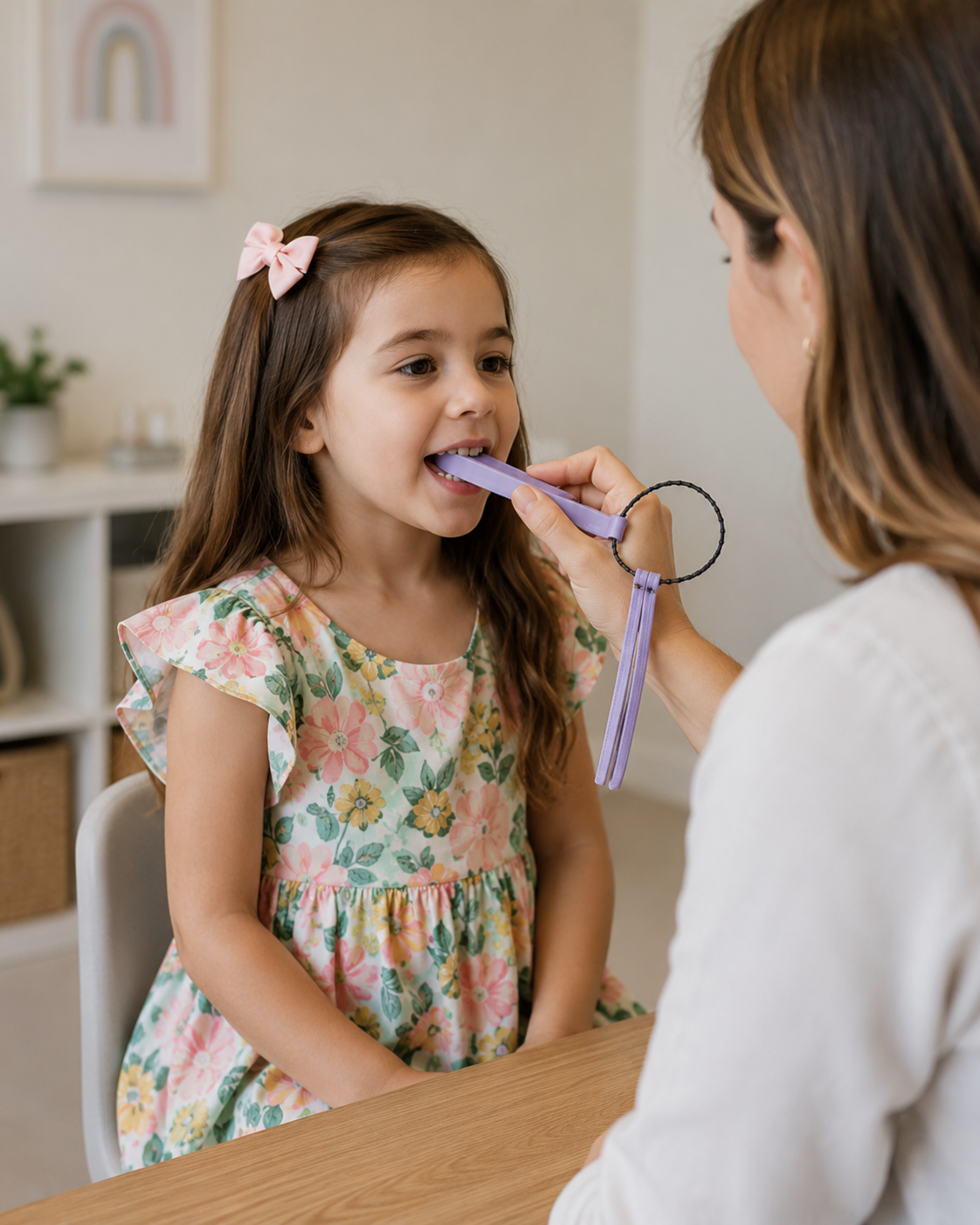
Welcome to OMT!Orofacial myofunctional therapy (OMT) addresses the oral structures (lips, tongue, jaw, cheeks and palate) and their impact on breathing, speech, swallowing skills and oral rest posture. OMT involves neuromuscular re-education or re-patterning of the oral and facial muscles, Therapy includes facial exercises and behavior modification techniques to establish proper tongue position for improved breathing, chewing, swallowing and speech.
Every person is different and OMT is not right for everyone. I recommend starting with a free consult so that we can talk more about your concerns and goals before booking the evaluation. You may schedule a time to chat below.
What Are Some Signs That You May Benefit From Orofacial Myofunctional Therapy?
Infants, children, and adults all experience different signs and symptoms of an orofacial myofunctional disorder. You may experience one or some of the following:
Digestive Issues/Acid Reflux
Picky/Selective Eating
Forward Head Posture
Orthodontic Relapse
TMJ Pain
Dental abnormalities or misaligned teeth (i.e. overbite, underbite, crossbite, narrow palate etc.)
Primarily open-mouth breathing
Tongue Tie and/or Lip Tie
Tongue Thrust
Difficuilty Nursing
Teeth Clenching or Grinding
Difficulty moving food in the mouth or chewing to feed properly
Oral habits such as thumb and finger sucking
Neck/shoulder tension and headaches
Prolonged Bottle, Pacifier, or Sippy Cup use
Snoring and/or sleeping
Anxiety
Difficulty breathing through nose due to allergies, enlarged tonsils, or enlarged adenoids

Dental alignment and dental development
Ability to sleep effectively
Ability to breathe effectively
Feeding skills, such as the ability to move food around in the mouth
Development of oral muscles and facial muscles
Speech skills
Oral hygiene (bad breath, cavities)
Social interactions (open mouth breathing, tongue out of mouth, drooling)
What May Be Negatively Impacted By Incorrect Oral Structure Position?
Who Needs Orofacial Myofunctional Therapy?
Infants, children, and adults of all ages can benefit from OMT. By working with infants who have tethered oral tissues pre- and post- surgery, we help to achieve healthy feeding skills, minimize scarring, and optimize tongue movement and function for their future. When treating children, we may be correcting issues that have already arisen or be preventing future problems that would arise. With adults, we work through and correct the symptoms of their myofunctional issues. Patients often report improved breathing, facial symmetry, chewing, and even speech (when combined with speech therapy). Referrals often come from dentists, orthodontists, ENTs, pulmonologists, allergists, and other physicians, and we will work with your other providers to help achieve the outcomes you are striving for.
What Should You Expect At Your Evaluation?
Before our meeting, you will complete paperwork, including a thorough medical history, so that I can best prepare for our time together. If possible, I ask that you submit video recordings of specific areas of concern that you may have. This may be especially helpful with children who do not always feel comfortable talking or eating on the spot!
During the evaluation, I will review the information you have provided and obtain further information regarding the patient's history. I will then assess the strength and movement of the patient's lips, tongue, jaw, cheeks, and palate. I will seek to observe my patient in a calm state, in directed movements, during communication, and meal/liquid intake. You may be asked to bring specific food items to the evaluation.
Pictures and video of the patient will be taken as part of the evaluation as a baseline of their oral structure and skills, and will be kept confidential.
After the evaluation is completed, I will analyze and review all the testing results and discuss the results with you. The evaluation will determine if there is a need for therapy and if any other referrals are needed. Oftentimes, my patients are already working with other specialists that support our goals; however, if needed, I am happy to refer you to amazing professionals in our local area.
What Is Your Orofacial Myofunctional Therapy Program Like?
Orofacial myofunctional therapy, or OMT, is a structured therapy program that focuses on improving oral function, including tongue posture, nasal breathing, swallowing patterns, and oral habits. Each program is individualized based on the client’s needs, age, goals, and any related medical or dental recommendations.
OMT services may be appropriate for children or adults who need support with tongue function, oral rest posture, mouth breathing, swallowing patterns, oral habits, or preparation for a functional frenuloplasty/tongue-tie release.
OMT Program Options
PROGRAM
BEST FOR
Foundations Plan
Children or adults whose main goal is preparing for a functional frenuloplasty/tongue-tie release
Comprehensive Plan
Oral Habit Elimination Program
Children or adults needing more individualized support beyond the Foundations Plan
Children ages 4+ working to eliminate oral habits
FOCUS
Establishing optimal tongue function, including correct oral rest posture, nasal breathing, and a proper swallowing pattern
Same as foundations plan plus additional individualized support that may include sleep hygiene, breath retraining, TMJ massage and trigger point release, health coaching, and support for creating long-term healthy oral function habits
Reducing and eliminating oral habits such as thumb-sucking, finger-sucking, tongue-sucking, pacifier use, pen chewing, and nail-biting
INCLUDES
6–9 month program, therapy kit, and 12 thirty-minute therapy sessions
12-month program, therapy kit, and 18 thirty-minute therapy sessions
Typically about 30 days, though some children may need more time